
100 Square Feet of Native Plants
Small Space
Have a sunny little spot that could use more bloom, more buzz, and more life? This kit packs 71 native plants into just 100 square feet, creating a beautiful garden with plenty to offer pollinators, birds, and other wild visitors.
You Garden Kit Comes With:
- 71 native plants, labeled and ready to plant
- Native annual seeds for some first-year color and pollinator food
- A scale planting plan showing where every plant goes—and how the garden is designed to grow over time
- Plant information so you can get to know what’s growing in your garden and who it supports (and if you want to dive even deeper, we’re just an email away!)
- A getting-started guide covering site prep, planting, watering, and ongoing care
How Much Work Are We Talking?
This is a DIY garden, so yes—you’ll need to get your hands dirty. But we’ve already done the plant research, design, spacing, and planning. You get to take it from here with the four tasks below.

Prep your site
Clear the planting area of grass and weeds and get it ready for planting. We’ll walk you through it in the getting-started guide.

Plant your garden
Follow the planting plan, get everyone in the ground, and water thoroughly. Everything is labeled, so there’s no botanical matching game required.

Help it get established
Keep an eye on water and weeds during the first growing season while your plants settle in and establish their roots.
Watch what happens
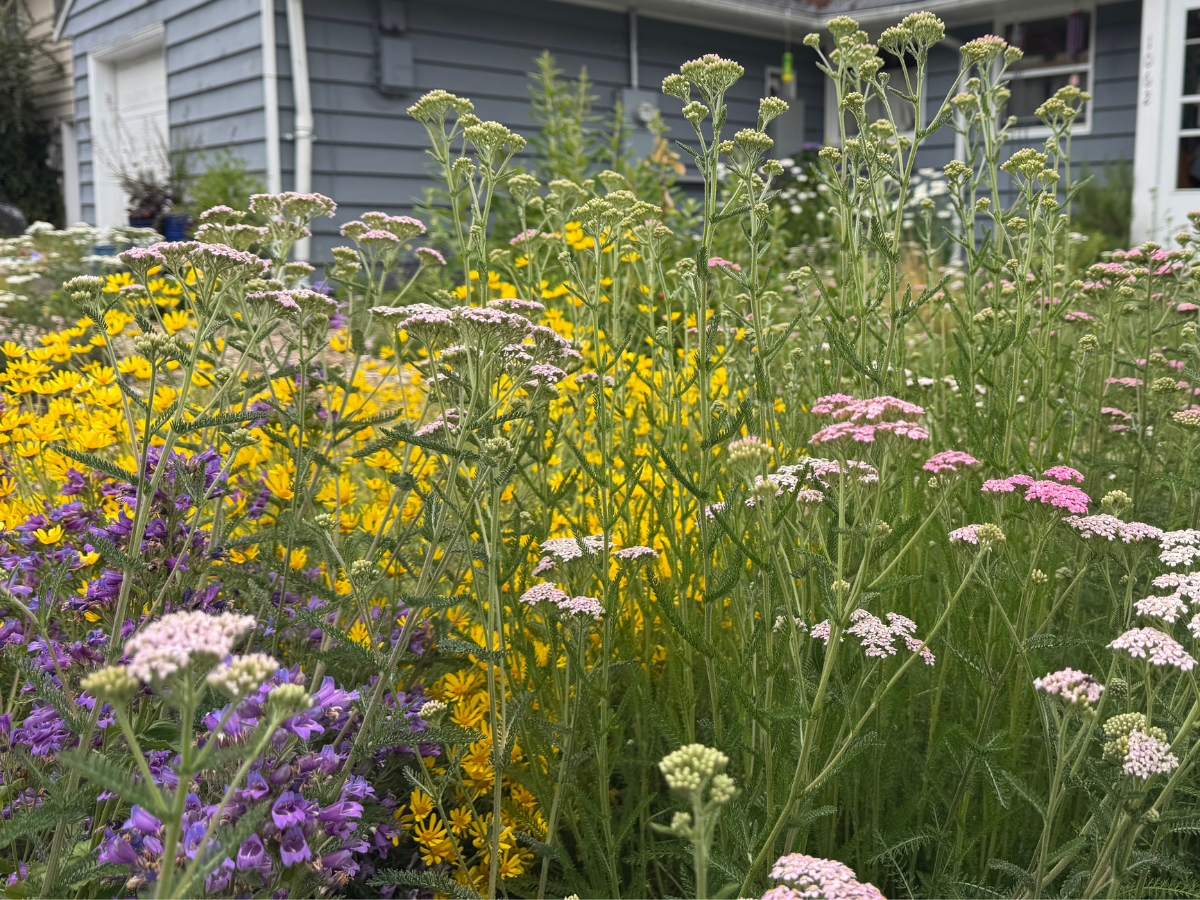
Your garden will change as it grows in. Plants get bigger. Flowers show up. So do pollinators, birds, and other wild visitors.
“I have never been more thrilled with the performance of a new garden bed. We planted our kit this April in the most inhospitable spot—a glacial till parking strip. The tiny plugs established so fast! They didn’t skip a beat in summer heat, and all the flowers were blooming this summer in time to help the bees. I also love that the plants are coordinated and go together beautifully. I can’t wait to see it next year.”
Meet the Locals

6 Common Yarrow
Achillea millefolium
- Season long bloom!
- Butterflies and small bees love the landing pads that the umbel bloom provides.


4 Showy Milkweed
Asclepias speciosa
- Big flowers, bigger ecological résumé.
- The clustered blooms are a nectar source for bees, butterflies, and other pollinators, while the plant supports a whole community of insects.


15 Great Camas
Camassia leichtlinii ssp. suksdorfii
- Spring’s blue-violet showstopper.
- A favorite with bumble bees, mason bees, hover flies, and beetles when early-season flowers are still in short supply.


16 Harebells
Campanula rotundifolia
- Tiny flowers, surprisingly determined.
- The nodding bell-shaped blooms offer nectar to pollinators and bring a little vertical delicacy to the garden.


7 Tufted Hairgrass
Deschampsia cespitosa
- The quiet structural genius.
- This native grass adds fine texture and year-round structure while making itself at home in everything from moist meadows to drier slopes.


5 Wooly Sunflower
Eriophyllum lanatum
- Sunshine, but make it fuzzy.
- Its golden flowers are a bright landing spot for pollinators, while the silvery foliage keeps things interesting after the flowers are gone.


14 Idaho Blue Eyed Grass
Sisyrinchium idahoense
- Looks like a tiny iris. Is actually not.
- Its small blue flowers bring early-season color and nectar to the garden.


7 Aspen Fleabane
Erigeron speciosa
- Season long bloom!
- Butterflies and small bees love the landing pads that the umbel bloom provides.


18 Roemer’s Fescue
Festuca roemeri
- Climate resilient!
- Butterfly larval host & vital prairie plant food source


4 Riverbank Lupine
Lupinus rivularis
- Blue spikes with serious ecological credentials.
- Like other lupines, it supports native insects while bringing tall, cool-toned flower spikes to the garden.


7 June Grass
Koeleria macrantha
- The understated one.
- This compact native bunchgrass thrives in dry, sunny conditions and adds seed heads, texture, and structure without demanding the spotlight.


30 Early Blue Violet
Viola adunca
- Small flower. Very useful plant.
- Violets are important host plants for butterfly caterpillars, making this little plant more than just a pretty face.


3 Douglas Aster
Symphyotrichum subspicatum
- Late-season purple power move.
- Aster’s fall flowers keep nectar and pollen on the menu after many summer bloomers have called it a year.


3 Canada Goldenrod
Solidago canadensis
- A late-season burst of unmistakable golden yellow.
- Keeps nectar and pollen on the menu as summer flowers wind down.


1 Annual Seed Packet
- The opening act.
- These native annuals bring first-year flowers and habitat while the perennial cast gets its roots together.
Plants are living things! If something isn’t available or doesn’t meet our standards, we may substitute a comparable native plant. Plants will come in 4″ pots or bareroot bundles.
Bloom Calendar

How Would You Like to Pay?
We offer two payment options. Choose whichever works best for you.
ACH / Bank Transfer
$300
Our lower price for paying directly from your bank account.
Credit Card
$309
Credit card payments are priced 3% higher to cover card processing costs.
Same kit. Same plants. Same plan. Just two ways to pay.